For the CEO
Deposit Drift™ is quiet.
Customers who like you still keep money elsewhere because nobody asked what it needed to do. This puts that question into every frontline conversation, at every branch.


January classSold out
January 13, 20, 27 and February 3, 2027
Help customers choose your bank for more of their financial lives.
Your customers can love your bank. And still keep their money somewhere else.
Using Guide, Don’t Pitch, your bankers practice hearing the need behind the first question, knowing when to recommend, refer or wait, and following through. Your branch managers get a guide to coach those conversations.
Next class: February 10 to March 3, 2027
Steve Lowisz teaches all four sessions live online.
Wednesdays, 1 to 3 p.m. Eastern · 16 seats
Register yourself or someone from your bank. $995 per banker.
What changes at the desk
Happy customers often keep important money at another bank, because nobody found out what that money needed to do. Bankers earn that choice through service that goes beyond a friendly transaction.
$40,000
maturing at another bank. She walks up and asks one question:
"What's your best CD rate right now?"

Quotes the rate and opens the CD. Helpful, and sometimes exactly right.
Answers plainly, then asks what the money needs to do. Her husband just moved into assisted living, so keeping some within reach matters more than the top rate. They agree on a plan, and the banker owns the follow-up.
Same customer. Same products. Different judgment.
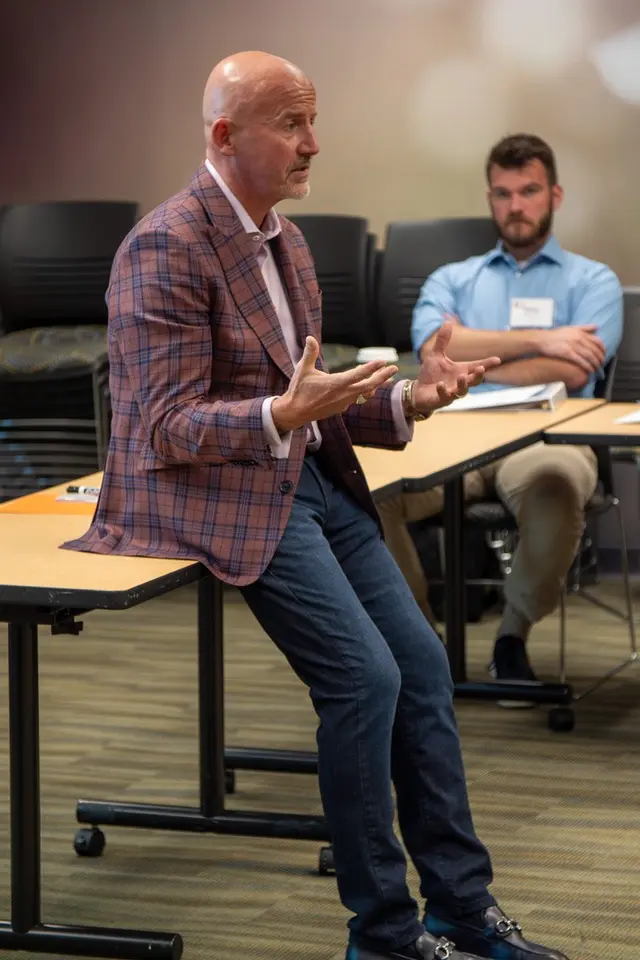
Judgment, not scripts
Most bank training hands out talk tracks and question lists. They work until the customer says something unexpected, which is most of the time. Guide, Don't Pitch builds the judgment underneath: noticing what's going on, deciding what's worth asking, and knowing when to recommend and when to wait.
| Training | Installation |
|---|---|
| Delivers content | Changes behavior at the desk |
| One event | Practice, application, feedback, reinforcement |
| Hands out scripts and question lists | Builds judgment for situations nobody predicted |
| Measures attendance | Managers observe behavior, and bankers prove it on unfamiliar situations |
Your bankers will never be handed a script or a question list.
Why this matters to you
For the CEO
Customers who like you still keep money elsewhere because nobody asked what it needed to do. This puts that question into every frontline conversation, at every branch.
For the Head of Retail
Every banker works from the same moves, and branch managers get a guide to observe them, ask useful questions and respond when standards slip.
For the Head of HR
Bankers prove the behaviors on unfamiliar situations in a final applied assessment, receive two individual feedback reviews, and keep a decision review tool after the course.
How the installation works
Work through customer situations with Steve in four live, two-hour sessions.
Apply the behaviors in your bank between sessions. Allow 20 to 30 minutes each.
Receive two individual reviews of your work.
Use the feedback to revise your work, then apply your reasoning to new situations.
Managers get a guide to observe the behaviors, ask useful questions and respond when standards are missed.
The loop
Managers keep it running after session four.
Wednesdays, 1 to 3pm ET, live online
Knowing the products is the starting point. These sessions put that knowledge to work in the moments that decide whether customers trust you with more.
Session 1 · Wed, Feb 10, 2027
Most bankers answer exactly what was asked, and the bigger need walks out the door. Your bankers practice separating what the customer said from what they assumed, and find out what the money has to do before recommending anything.
What your managers will see
Bankers asking what the money needs to do before they quote a rate.
The moment
A customer asks only about a rate. A business owner wants a quick transfer.
Answer the request. Find out what's behind it.
Session 2 · Wed, Feb 17, 2027
More questions don't build trust. The right one does. Your bankers practice spotting the detail that matters, asking about it, and letting the answer change where the conversation goes, instead of running a checklist.
What your managers will see
Bankers following up on what customers mention in passing.
The moment
A retiree mentions, in passing, that her son is helping with her bills now.
Use the answer. Don't just move to the next question.
Session 3 · Wed, Feb 24, 2027
Recommending too early costs trust. Waiting too long costs the relationship. Your bankers practice reading which moment they're in (recommend, bring in a colleague, or wait) and then owning the follow-through.
What your managers will see
A clear next step, with an owner and a date, after every needs conversation.
The moment
A young couple asks about a home loan before they've talked about their savings or timing.
Match the next move to the need. Follow it through.
Session 4 · Wed, Mar 3, 2027
The hardest moment for any banker is when new information makes the planned recommendation wrong. Your bankers practice changing course out loud, then prove it on unfamiliar cases in the final assessment.
What your managers will see
Recommendations that change when the facts change, not the same pitch for everyone.
The moment
Mid-conversation, a customer shares something that changes the whole picture.
Change your approach when the facts change.
Built on Guide, Don't Drive™, the Human Performance Operating System™.
What installations have produced
Across CBI installations.
Many speakers lead training in the banking industry, but Steve knows banking. His message was timely, relevant, and left our team encouraged and motivated.

“Their ability to connect leadership principles to real-world teamwork resonated with every level of our organization. Our employees left with practical tools they can apply immediately, and the positive impact extended well beyond the session.”

“Using Steve's training enabled our management team to break down complex topics of communication, trust and accountability, and find more wins with our team members and clients.”

Community banks that have worked with Steve









From prior CBI engagements. This course is new for 2027.
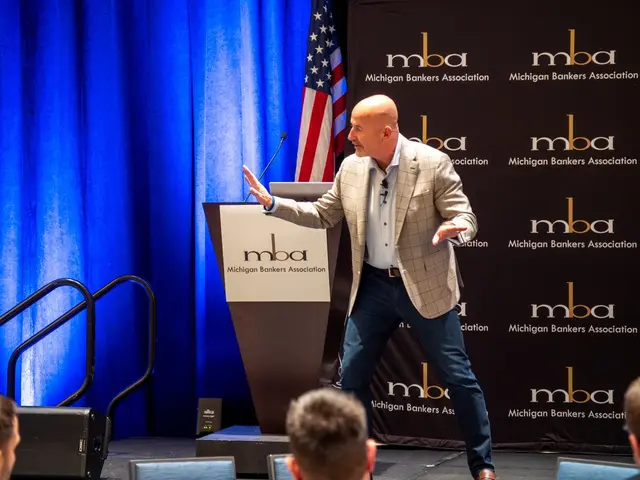
Your instructor, every session
Steve personally teaches all four sessions live. He leads the case discussions and asks participants to explain what they noticed, why it matters, and what they’d do next. The focus is sound reasoning, not a preferred phrase.
What's included
Holds the situations, reflection and application work for every session.
Bankers show the behaviors on new, unfamiliar situations.
Bankers keep it after the course to check their reasoning on future conversations.
For personal, universal and experienced frontline bankers, plus branch leaders, who already have basic product knowledge.
February 10 to March 3, 2027
$995per banker
Wednesdays, February 10 to March 3, 2027, 1 to 3 p.m. Eastern. Live online. Registration closes February 9, 5 p.m. Eastern.
Full refund through January 27. If fewer than 8 bankers enroll by February 3, CBI cancels and refunds everyone.
Questions about fit, registration, or enrolling your team? Email Steve or call 734.521.2800.
For course cancellation, substitution, or other policy requests, contact Steve using these links.
Steve Lowisz teaches all four sessions live online. Each banker gets a participant workbook, between-session assignments, two individual feedback reviews, a final applied assessment and a manager guide. $995 per named banker.
No. Scripts break the moment a customer says something unexpected. Bankers practice noticing what's going on, deciding what's worth asking, and knowing when to wait.
Personal, universal, and experienced frontline bankers, plus branch leaders. Participants should already have basic product knowledge.
Joining instructions and the participant workbook arrive before session one.
This cohort installs the frontline behaviors banker by banker. A bank-wide Guide, Don't Drive installation adds leadership alignment, manager inspection and rollout across every branch. Banks can start with a cohort and expand from there.
Recordings, accreditation, unlimited coaching, extra live sessions and private makeup sessions aren't promised.
You can request an invoice by email. An invoice request doesn't reserve a seat or confirm enrollment; payment and capacity must be verified first.
This summary doesn't replace the full terms below.
Not ready to enroll?
Planning for the whole bank?
Talk with Steve about a bank-wide Guide, Don't Drive installation.
Book 30 minutes with SteveEvery offer runs the same four steps. That's why the behavior is still there in 90 days.
Day 90: still there.
Scenario: a lender skips the follow-up call.
I will ask one coaching question in every 1:1 this week.Branch manager, Week 1
Tuesday, 2:40 pm. A customer asks about a CD rate.Used the question from Monday.
Every Monday. Until it holds.
Every Skill Install ends with written commitments and a 30-day check-in.